
Consider the certificate chain, expiration date, and HTTPS configuration.

What is this technology or tool used for?
TLS encrypts client-server communication on the network and verifies the identity of the other end through certificate verification. However, using HTTPS does not automatically fix authorization flaws at the application layer.
Safe practice framework
Examples in this guide: It is limited to your own local machines, isolated virtual laboratories or systems for which you have testing authority. Define the scope of operations in writing, minimize personal data collection, and prepare a fallback plan for production changes.
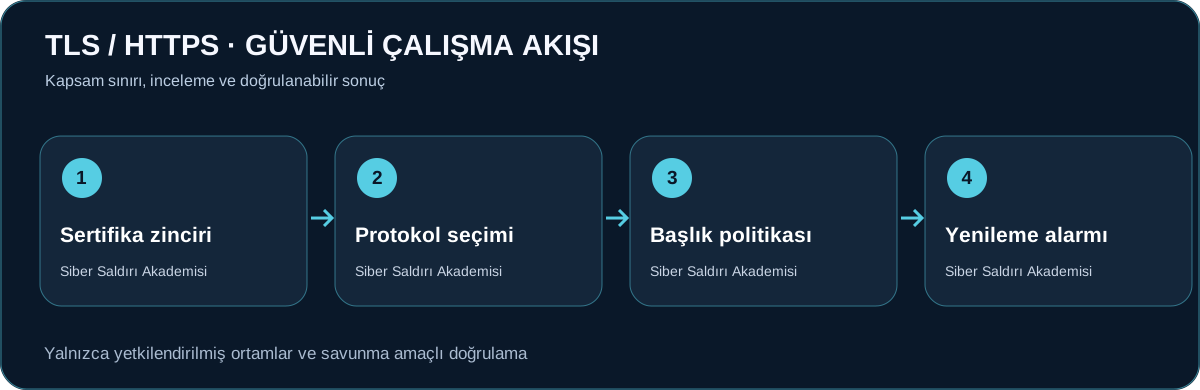
Step by step review plan
- Verify the domain name, signature chain, and validity range of the certificate.
- Compare supported TLS versions and server configuration with current security policies.
- Consider subdomain coverage and fallback need when implementing HSTS.
- Create automatic certificate renewal, monitoring, and potential failure notifications.
Controlled lab exercise
On your own localhost HTTPS test page, view certificate details from the browser security panel; Note the expiration date and chain of trust.
How to interpret the outputs?
- Valid HTTPS connection does not imply secure application code.
- Certificate renewal failure may result in service interruption.
Common mistakes
- Turn off certificate checking in development and move it to production
- Using preload without understanding the scope of HSTS
- Not setting an alert for renewal
Example security scenario
Consider a web application that has a few days until its certificate expires. Even if the renewal automation appears to be working, it is necessary to verify the actual deployed certificate and reinstallation of the service. Visitors may receive a security warning due to incorrect chain or incorrect domain name. Test the certification renewal and alarm mechanism through regular exercise.
Findings assessment matrix
The table below explains the context in which findings should be checked rather than automatically judged.
| Observation | Possible interpretation | verification |
|---|---|---|
| nearing expiration | Risk of outage | Watch live certification date |
| chain error | Client trust cannot be established | Verify intermediate certificates and presentation order |
| Domain name conflict | No identity match | Test SAN areas |
Basic concepts
- TLS: transport layer security
- SAN: valid domain names in the certificate
- HSTS: browser's HTTPS usage policy
At the end of your practical work, collect scope, evidence and verification notes in a single report. Cyber Attack Academy recommends this logging discipline for responsible use of security tools and sustainable defense.
Checklist and next step
- I confirmed the authorization, scope, asset owners, and approved testing window.
- I recorded the system status and evidence before and after the review.
- I evaluated the findings based on impact, likelihood, and context; I checked for false positives.
- I identified the remediation owner, retest date, and rollback plan.
Official documentation and resources
Vendor documentation: TLS/HTTPS official source. Check the version and license terms of the resources before use.
this article Sibersaldiri.com Originally prepared for. It has educational purposes; It is not a substitute for security certification or completed penetration testing alone.
